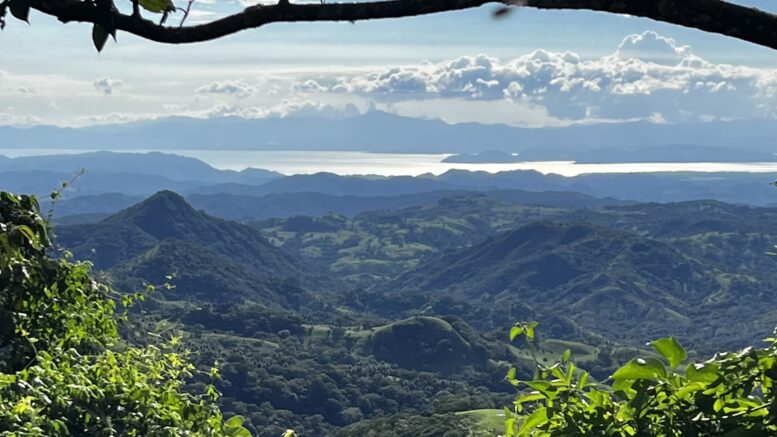
By the time the clouds lower themselves into the canopy, Monteverde stops being a place and becomes a living system.
High in Costa Rica’s Cordillera de Tilarán, the Monteverde cloud forest exists in perpetual conversation with the sky. Moisture drifts in on trade winds from both the Pacific and the Caribbean, condensing into a moss-draped wilderness where orchids cling to branches and resplendent quetzals flash crimson and green through the mist. This is rainforest at its most intimate—less spectacle, more immersion—where conservation, adventure, and quiet reverence coexist.
The Motto team visited the Monteverde Cloud Forest region this year and compiled a travel guide that includes an off-the-beaten-path hiking reserve (Children’s Eternal Forest,) a must-do adventure destination (Treetopia Zip Lines,) and a wildlife conservation sanctuary (Natuwa Monteverde,) for a balanced visit covering nature, action and education. We recommend dedicating at least 4-5 days to this region of Costa Rica as Monteverde seems to reward travelers who move deliberately and a slower pace. The forest does not perform on demand—it reveals itself gradually, to those willing to listen.
Children’s Eternal Rainforest: A Forest Saved by the World
The largest private reserve in Costa Rica, the Children’s Eternal Rainforest (Bosque Eterno de los Niños) is not merely protected land—it is a promise kept. Purchased and preserved through donations from children in more than 40 countries, the forest spans over 56,000 acres, connecting lowland rainforest to high-altitude cloud forest in a critical biological corridor.
Hiking here feels exploratory in the truest sense. Trails are narrower and less trafficked than Monteverde’s more famous reserves, rewarding patient travelers with encounters that feel unchoreographed: howler monkeys calling across valleys, iridescent beetles crossing leaf litter, and towering strangler figs gripping the earth like cathedral columns.
The San Gerardo and Pocosol stations offer guided hikes into different ecosystems, each revealing a distinct face of the rainforest. This is a place where biodiversity isn’t curated—it simply exists, dense and unfiltered.
Why it matters: The reserve protects more than 700 tree species and countless insects, birds, and mammals, while serving as a living classroom for conservation biology.
Treetopia Zip Line: Flight Through the Canopy
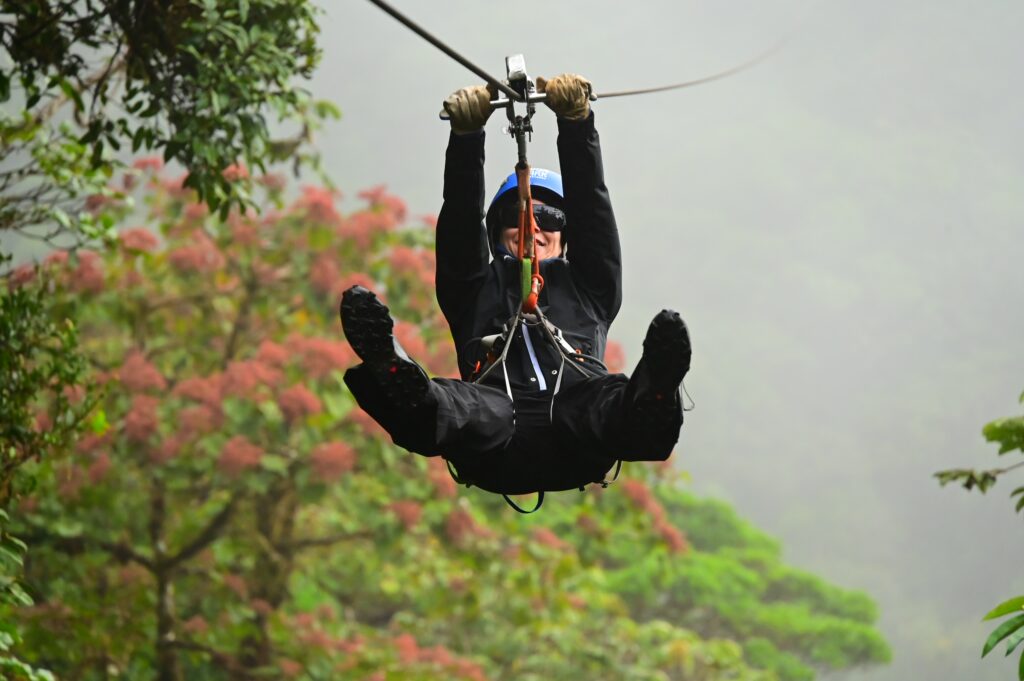
Where the forest floor hums softly with life, the canopy tells a different story—one of wind, height, and movement. Treetopia’s zip line experience offers rare access to this upper world, where bromeliads pool rainwater and toucans move with practiced ease.
Suspended hundreds of feet above the forest, riders glide from platform to platform, gaining a perspective once reserved for birds and botanists. The lines are long, fast, and engineered to minimize ecological impact, allowing thrill without intrusion.
Beyond the adrenaline, the experience reframes the rainforest as a vertical ecosystem. You don’t simply pass through the trees—you move with them, catching glimpses of how life stacks, layers, and adapts in three dimensions.
Unlike other Zip Lines in Monteverde, Treetopia offers a comprehensive experience including an aerial tram, an exciting ‘drop’ element, one of the longest lines in the area and an automated breaking mechanism controlled by the guide, rather than the traditional user-applied ‘hand break’ system still prevalent with most other operators.
Natuwa Sanctuary Monteverde: Wildlife, Reimagined
Set against forested hills just outside Monteverde, Natuwa Sanctuary offers a different kind of encounter—one grounded in rehabilitation, not exhibition. Home to rescued wildlife that cannot be released back into the wild, the sanctuary emphasizes ethical stewardship over spectacle.
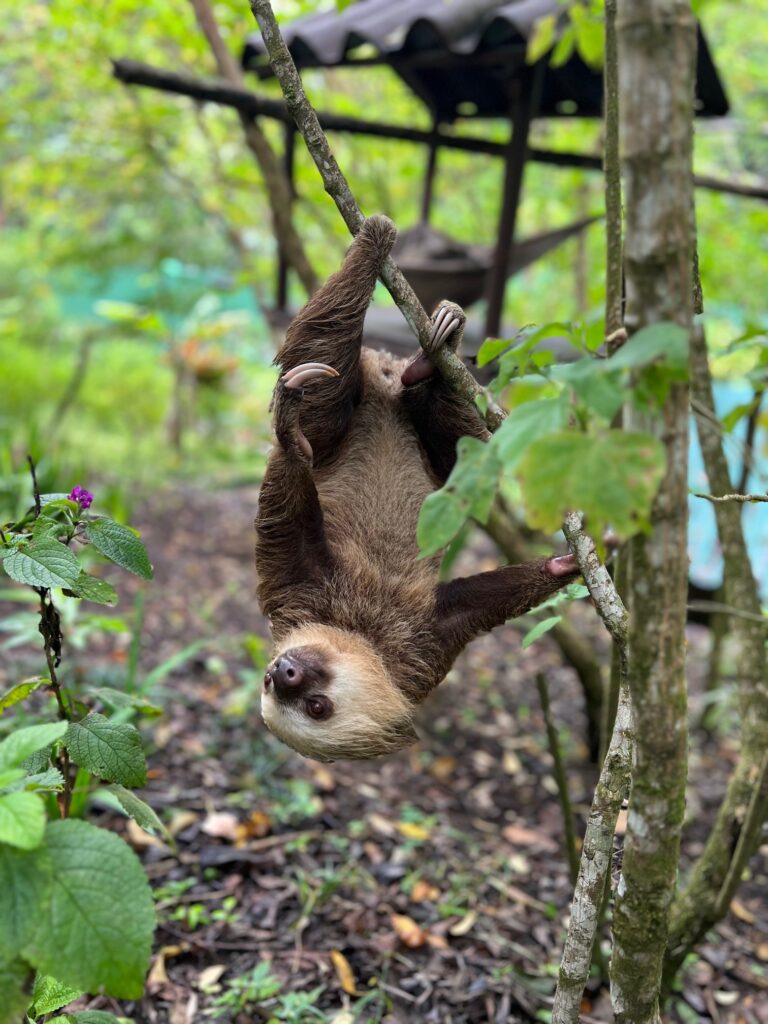
Scarlet macaws perch in open-air habitats, jaguars prowl expansive enclosures, and spider monkeys swing through trees with practiced grace. Guided visits explain not just what you’re seeing, but why these animals are here—often victims of habitat loss or the illegal pet trade. The sloths in Natuwa are a special draw – at any given moment, the sanctuary is rehabilitating up to two dozen adult and baby sloths, all of which seem to be completely without fear of humans, making for perfect viewing opportunities of these otherwise elusive creatures.
Unlike traditional zoos, Natuwa positions humans as guests, not observers. Pathways wind naturally through the terrain, and education is woven seamlessly into the landscape.
What sets it apart: A strong focus on conservation education, local employment, and restoring respect for wildlife rather than exploiting curiosity.
When to Go & How to Experience It
- Best season: December–April for clearer skies; May–November for richer greens and fewer crowds
- Ideal stay: 2–3 nights to allow time for misty mornings and slow exploration. We stayed for a week, and weren’t bored for a moment
- What to pack: Light rain gear, hiking shoes with grip, binoculars, patience
Monteverde is not about checking sights off a list. It’s about surrendering to a place that has learned how to thrive through protection, cooperation, and restraint. From the children who helped save a forest, to the travelers who glide above it, to the animals given second chances within it—this corner of Costa Rica tells a rare story.
Be the first to comment on "Monteverde: Where the Forest Breathes Back"